
Pinterest Marketing for Small Businesses: Get Regular Traffic in 2026 Without Daily Posting
You open Instagram, see three days of missed posts, feel a flicker of guilt, and close the app again. Sound familiar?
Here’s the thing nobody tells you: you don’t need Instagram’s daily grind to grow. You need a platform built for people who don’t have hours to spare every single day. That platform is Pinterest.
Not sure where to start? We got your back. This guide walks you through Pinterest marketing for small businesses step by step.
Why “Just Post Every Day” Advice Doesn’t Work?
Most social media advice assumes you have time to spare. Film a Reel. Write a caption. Reply to comments. Do it again tomorrow, and the day after that.
For an owner working a 9-to-5 and running a business on nights and weekends, that’s not the right strategy. You end up either quitting the business side or quitting sleep. Neither one is a real solution.
The real problem isn’t that you’re lazy or unmotivated. It’s that most platforms are built to reward daily presence, and you simply don’t have daily hours to give.
The Search Engine Behind Every Pin
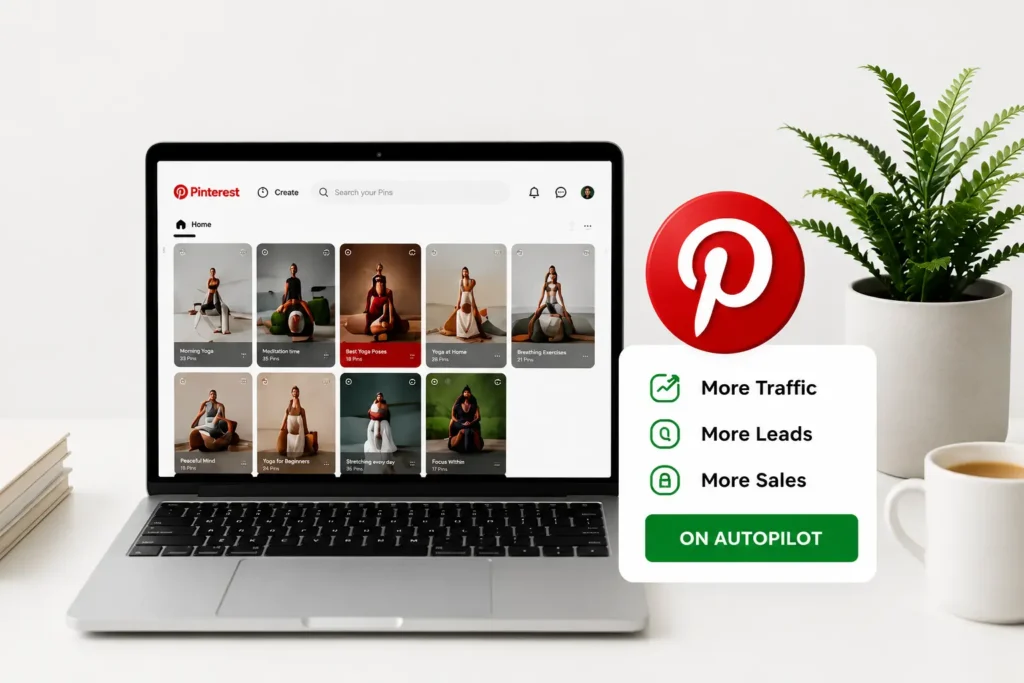
Pinterest is a visual search engine, closer to Google than to Instagram. People go there to search for ideas, not to scroll through what a friend posted an hour ago.
That difference matters more than it sounds. A well-made pin can keep showing up in search results for months, sometimes years, after you hit publish. You’re not fighting an algorithm that buries yesterday’s post. You’re building a library of content that keeps earning clicks long after you’ve moved on to something else. That steady, compounding Pinterest traffic is exactly what makes the platform worth the setup time.
How to Increase Pinterest Traffic Without Posting Daily
The short answer: use keyword-rich pin titles and descriptions, publish fresh pins on a consistent schedule rather than a daily one, and make sure every pin links to a page strong enough to hold a visitor’s attention once they click through.
Three things specifically move the needle:
1. Keywords — Pinterest reads your pin titles, descriptions, and board names the same way Google reads a webpage. Get the words right, and the platform finds the right audience for you.
2. Fresh pins linking to strong content — Pinterest favors new pins, but the page they land on is what keeps people around.
3. Consistency over volume — A steady rhythm of quality pins outperforms a burst of ten pins in one day followed by silence.
How to Grow Pinterest as a Busy Business Owner
The short answer: batch a month of pins in one sitting using two or three reusable templates, then schedule them so they go out automatically across the month instead of relying on you to post in real time.
This is the part most owners skip, not because it’s hard, but because nobody tells them it’s allowed. You don’t have to be online when a pin goes live. You just have to have created it in advance.
ON THIS PAGE

Need Help Getting Traffic on Autopilot?
We build a Pinterest strategy that brings you consistent traffic-without daily posting.
A Pinterest Marketing Strategy You Can Actually Maintain
Here’s a simple Pinterest strategy that doesn’t require a marketing degree or a spare afternoon every week — just one focused session a month.
Step 1: Do keyword research once a month
Type your topic into Pinterest’s search bar and note the autocomplete suggestions. These are the exact phrases people are searching for. Keep a running list you can pull from whenever you sit down to create pins.
Step 2: Set up boards around what your audience actually searches for
Not around what sounds cute. Boards are another place Pinterest reads for context, so name them the way your audience thinks, not the way you’d describe your brand at a dinner party.
Step 3: Build two or three pin templates
Design them once in Canva. Reuse the same templates for every new pin. This single habit is what makes batching possible — you’re not starting from a blank canvas every time.
Step 4: Batch a month of pins in one sitting
Set aside two to three hours. Create every pin for the month in one go
Step 5: Schedule it and let it run
Use Pinterest’s native scheduler or a tool like Tailwind to spread your batched pins across the month. Once it’s scheduled, your job is done until next month’s batch session.
What This Looks Like in Practice?
Picture an owner who works full-time Monday through Friday. On the first Saturday of the month, she sets aside two hours: ten minutes of keyword research, ninety minutes designing pins from her templates, and twenty minutes scheduling it all out. Then she closes her laptop and doesn’t touch Pinterest again until next month’s session, while her pins keep surfacing in search and sending visitors to her site all month long.
Ready to Get Traffic on Autopilot
We help business owners build Pinterest strategies that drive consistent traffic and leads without the daily posting stress.
Pinterest Marketing for Small Businesses: A Worthy Strategy
You don’t need another platform demanding daily attention. You need one where the effort you put in on a Saturday morning keeps working for you all month long. That’s what a real Pinterest marketing strategy looks like for someone who already has a full-time job traffic that doesn’t clock out when you do.
If you’re ready to stop feeling behind on social media and start letting your content work for you, Pinterest might be the easiest platform you’re not using yet